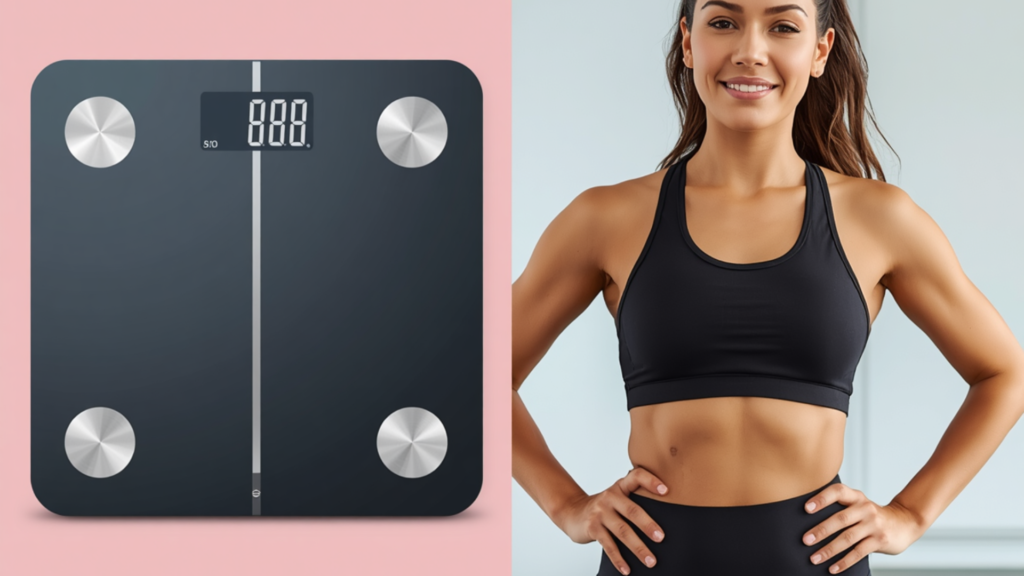
You step on the scale expecting to see a lower number after weeks of workouts and clean eating. The number hasn’t budged. For many people, this is discouraging. But here’s something worth considering: body composition vs weight can tell a very different story than what the scale reveals.
Your weight is just one data point—a snapshot of what you weigh on any given day. Body composition, on the other hand, reveals what that weight actually consists of: muscle, fat, water, and bone. Understanding the difference between these two measurements may help you measure progress more accurately and stay motivated on your fitness journey.
What’s the Difference?
Weight (The Scale)
Weight simply measures how much you weigh at any given moment. It includes everything:
- Muscle tissue
- Fat tissue
- Water
- Bones
- Internal organs
- Digested food
The challenge with weight as a standalone metric: Two people can weigh exactly the same but look, feel, and function quite differently. Weight fluctuates daily based on water retention, food intake, hormones, and sleep—which can make it an unreliable solo metric for tracking progress.
Body Composition (The Fuller Picture)
Body composition breaks down your weight into more meaningful categories:
- Lean mass (muscle, bone, organs, water)
- Fat mass (essential and storage fat)
- Estimated body-fat percentage (the proportion of fat to total weight)
This breakdown can offer insight into how you look, feel, and perform—in ways the scale alone cannot.
Why Body Composition vs Weight Matters
The Muscle vs. Fat Reality
Muscle tissue is denser than fat. One pound of muscle takes up considerably less space than one pound of fat. This means you can gain muscle while your weight stays the same—or even decreases slightly. For many people, this is where progress becomes visible even when the scale doesn’t move.
Consider this scenario: A woman weighs 150 lbs at 35% body fat. After 3 months of strength training and consistent nutrition:
- Weight: 148 lbs (down 2 lbs)
- Body fat: 28% (down 7 percentage points)
- Lean mass: Increased noticeably
The scale shows minimal progress. Body composition measurement reveals the actual transformation—and for many people, this realization is eye-opening.
Performance & Overall Health
Your body composition may influence:
- Athletic performance: More muscle can contribute to strength, speed, and power
- Metabolic rate: Muscle tissue burns more calories at rest than fat tissue does
- Bone density: Regular strength training can help protect bone health
- Injury prevention: Strong muscles provide support and stability for joints
- Longevity: Maintaining muscle mass as you age is associated with better long-term health outcomes
Weight alone tells you little about any of this.
Mental Health & Motivation
When you understand body composition vs weight, you may stop fixating on a number that doesn’t reflect your actual progress. Instead, you can celebrate tangible changes: fitting into clothes better, lifting heavier, improved energy, or visible muscle definition. For many people, this shift prevents the frustration and demotivation that comes when the scale doesn’t move despite genuine progress.
How to Measure Body Composition
InBody Scan: Detailed and Convenient
InBody uses bioelectrical impedance to estimate:
- Lean mass distribution
- Fat mass distribution
- Estimated body-fat percentage
- Segmental analysis (which body parts may have changed)
- Muscle quality metrics
Pros: Highly detailed, trackable over time, relatively quick Cons: Not available everywhere; costs typically $20–50 per scan
DEXA Scan
Dual-energy X-ray absorptiometry measures bone density and body composition with precision.
Pros: Considered highly accurate Cons: Expensive, requires access to a medical facility, involves radiation exposure
Bioelectrical Impedance (Scales & Handheld Devices)
More affordable home options using electrical current to estimate body composition.
Pros: Affordable, convenient, easy to track over time Cons: Less accurate than clinical methods; results can be affected by hydration levels
Skinfold Calipers
A trained professional measures skinfolds at specific body points to estimate fat percentage.
Pros: Inexpensive, minimal equipment needed Cons: Requires a trained technician; less accurate than other methods
Progress Photos & Measurements
Taking photos and measuring body parts (waist, chest, arms, thighs) is free and highly visual.
Pros: Free, provides visual evidence, motivating for many people Cons: Subjective; doesn’t measure internal changes like bone density or visceral fat
The Scale Still Has a Place
Don’t discard your scale—just use it as one tool among many:
✓ Weigh yourself weekly at the same time under similar conditions ✓ Track the overall trend rather than daily fluctuations ✓ Combine scale weight with body composition data for a complete picture ✓ Remember that daily fluctuations (from water, food, hormones) are normal ✓ Use the scale as one metric, not the only metric
Building Better Body Composition
Strength Training: Resistance exercise is one of the most effective ways to build and preserve muscle.
Adequate Protein: Protein supports muscle maintenance and growth. Most active people benefit from including protein at each meal.
Appropriate Calorie Balance: Eating in a way that supports your goals—whether that’s maintaining, losing, or gaining—while preserving muscle is important. Extreme calorie restriction often leads to muscle loss.
Sleep & Recovery: Most people function better with 7–9 hours of sleep, which supports muscle growth and hormonal balance.
Consistency: Real body composition changes typically take 8–12 weeks to become noticeably visible.
The Bottom Line
Body composition vs weight isn’t a debate—it’s a different way of looking at progress. Weight is a crude measurement that ignores what your body is actually made of. Body composition tells you whether you’re building muscle, losing fat, and making genuine progress toward your health goals.
Rather than obsessing over scale numbers, consider tracking body composition through InBody scans, progress photos, measurements, or performance metrics (like how much you can lift). Many athletes, coaches, and fitness enthusiasts use these methods precisely because they provide a clearer picture.
You might surprise yourself. That stalled scale number? It could actually represent significant progress in your body composition.
InBody uses bioelectrical impedance to estimate body composition. Results may be affected by hydration, food intake, exercise, sodium, alcohol, menstrual-cycle changes, and testing conditions.
InBody results should be viewed as estimates and are most useful for monitoring trends when testing conditions remain consistent.